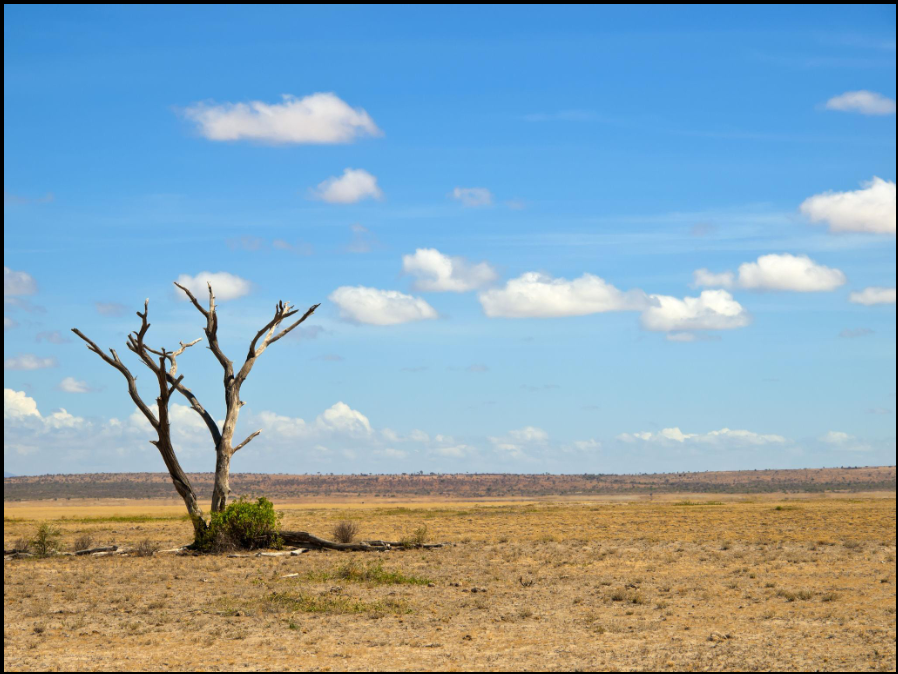
The African savannah has always lived between extremes. Long dry seasons, unpredictable rainfall, dust-filled winds, and intense heat are not new to the people who call these lands home. But something is changing. Seasons are becoming harder to predict. Rivers that once flowed throughout the year now disappear for months. Farmers wait longer for rain, while heatwaves arrive earlier and stronger.
Across many parts of Africa, climate change is no longer a distant warning discussed only in conferences and reports. It has become part of everyday life. Families are adjusting planting seasons. Herders are traveling farther in search of water. Cities are battling rising temperatures and worsening floods.
Yet amid these challenges, something remarkable is happening. Communities are adapting.
In northern Nigeria, local farmers are experimenting with drought-resistant crops that can survive under intense heat and low rainfall. Instead of depending entirely on traditional planting calendars, many now combine indigenous knowledge with weather forecasts to make better farming decisions.
In parts of Kenya and Niger, tree restoration projects are slowly bringing damaged land back to life. Villages that once struggled with severe soil erosion are beginning to see greener landscapes return. These efforts are not just about planting trees for appearance. Trees reduce soil degradation, improve rainfall retention, and create more stable environments for agriculture.
Young Africans are also playing a major role in climate innovation. Across universities and tech hubs, students and entrepreneurs are building solutions that combine technology with environmental awareness. Some are creating low-cost irrigation systems powered by solar energy. Others are developing mobile apps that help farmers receive weather alerts and market information in local languages.
The conversation around climate change often focuses on disaster, and rightly so. Floods, droughts, desertification, and food insecurity are serious threats. But there is another side to the story that deserves attention: resilience.
Communities across the continent are proving that adaptation is possible when people have access to knowledge, support, and local leadership. Climate action does not always begin with governments or global organizations. Sometimes it begins with a single farmer changing planting methods. Sometimes it begins with a student building a solution in a small classroom.
There is also an important lesson in how traditional knowledge continues to guide survival. Many rural communities have spent generations learning how to live with harsh environmental conditions. Elders understand wind patterns, soil behavior, and seasonal signs in ways that modern systems are only beginning to appreciate. Combining this wisdom with scientific research may become one of the strongest tools for future climate adaptation.
Still, the road ahead remains difficult. Rising temperatures continue to threaten food systems. Rapid urbanization places additional pressure on water and energy resources. Many vulnerable communities lack access to funding and infrastructure needed for large-scale adaptation.
This is why climate conversations must move beyond awareness alone. Awareness matters, but action matters more. Investments in renewable energy, sustainable agriculture, environmental education, and local innovation are essential.
For Africa, climate change is not just an environmental issue. It is an economic issue, a health issue, a migration issue, and a future-generation issue.
The savannah may be scorched, but it is not silent. Across villages, towns, farms, and cities, people are responding with creativity, resilience, and determination.
And perhaps that is where hope begins.
Key Takeaways
- Climate change is already affecting daily life across African communities.
- Local adaptation strategies are helping farmers and communities survive environmental changes.
- Youth-led innovation and technology are becoming important tools in climate resilience.
- Traditional environmental knowledge still plays a critical role in adaptation.
- Sustainable investment and action are necessary for long-term environmental stability.

Discussion (0)